
A three-quarter-million-dollar race car, a livery by one of the most respected motorsport design studios in the world, and a wrap where precision cutting and knifeless tape brought every stripe into line with the bodywork.
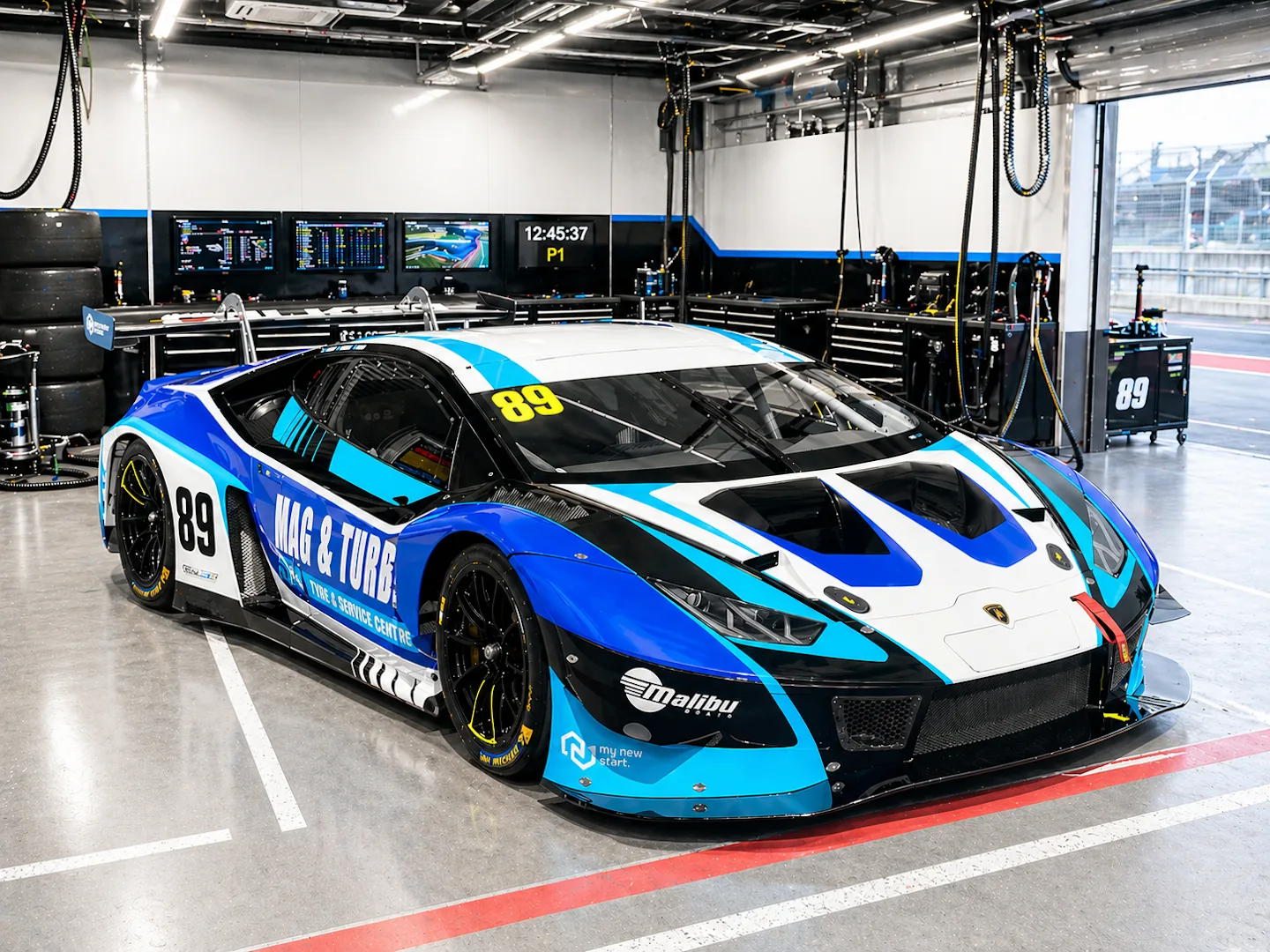
When the car is worth three quarters of a million dollars, the execution has to match. This livery was designed by PIXLSRS — regarded worldwide for their motorsport work — and almost every element of the stripe package is built to run with the natural swage lines and shapes of the bodywork.
That is what makes it hard. A design that follows the car’s own geometry can’t be approximated. Get a line a few millimetres off and it stops agreeing with the panel it sits on, and the whole thing looks wrong without anyone being able to say why.
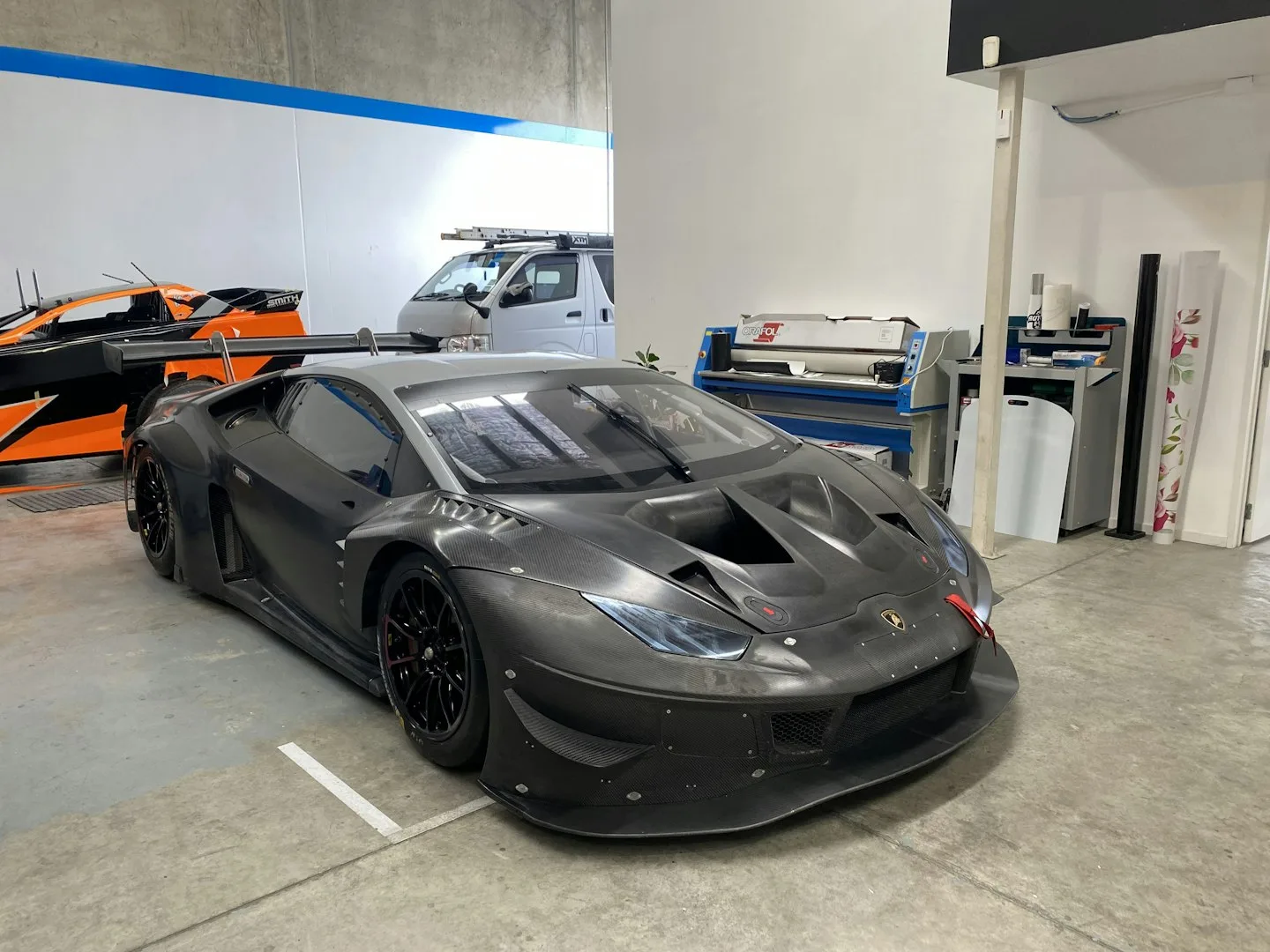
The bodywork came to us finished in natural carbon fibre, which meant a full wrap rather than a graphics package over paint. Solid gloss black vinyl went down as the base layer, gloss white for the stripes, and the blocks of colour were digitally printed to get the vibrancy the design needed — carbon underneath will dull anything less.
Every layer was mapped in advance to keep overlaps and joins to a minimum. On a car this size with this many colours, the difference between a planned sequence and an improvised one is visible from across a room.
On each panel, whichever colour carried the most area was the one taken out to the outermost edges. It means the panel edges read as one clean colour rather than a stack of layer ends, and it puts the vulnerable joins where they’re protected.
The tape was laid along the car’s own swage lines to dictate where each stripe sits — no cutting on the vehicle, and the design ends up agreeing with the bodywork rather than fighting it. Where multiple layers stacked, the tape stayed in place until every layer for that edge was finished, so one pull gave a perfect cut through the lot instead of handling the same edge repeatedly.
The groupings that run narrow to thick with even spacing were CNC plotter cut, so the spacing is exact rather than eyeballed. The tape still determined where each group sat against the flowing shape of the panel.
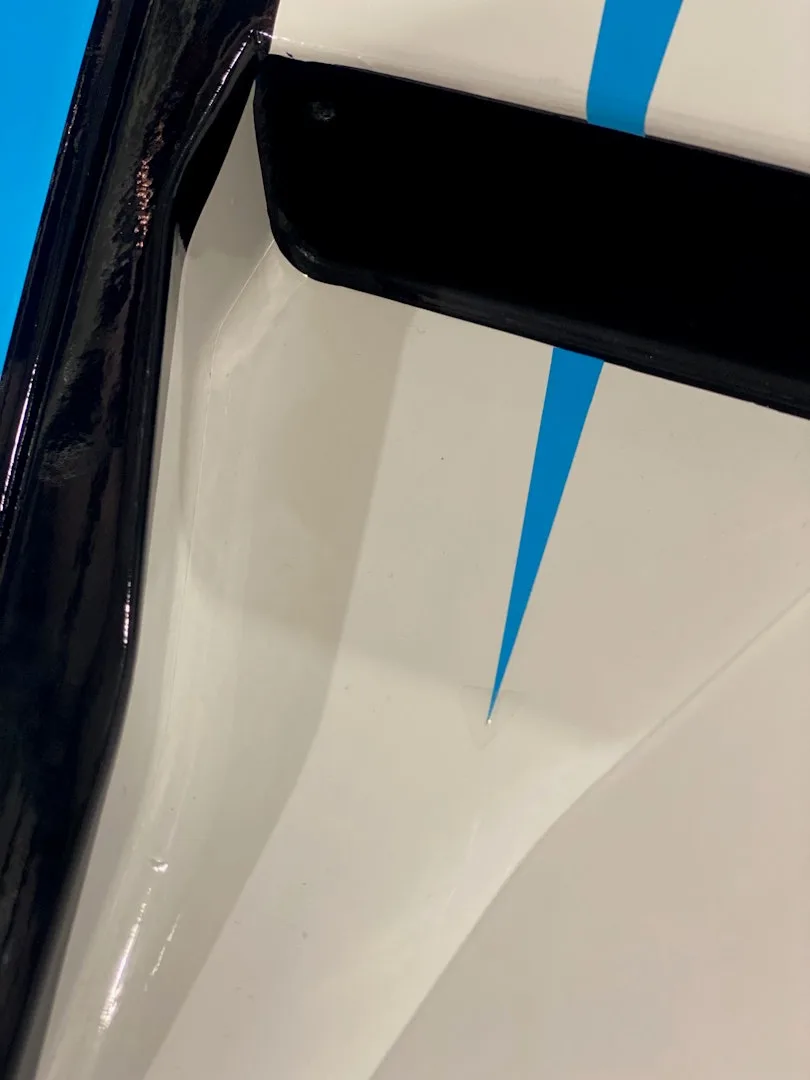
A race livery gets cleaned constantly, and a wrap fails at its edges long before it fails anywhere else. Two details do most of the work here, and neither is visible unless you go looking for it.
Each stripe tapers to a point, and a point is exactly where vinyl starts to lift. Every tip got a clear gloss laminate cap — plotter cut to a rounded-edge triangle at 10mm — laid over the top. Invisible on the finished car. The reason the tips are still down after a season of washing.
Same thinking applied to the sponsor logos. Every decal was contoured outward in whichever background colour matched the layer it was landing on, with a rounded-corner die line for the edge. Small lettering and sharp corners are the first things to peel; giving them a margin and rounding the corners takes that failure point away.
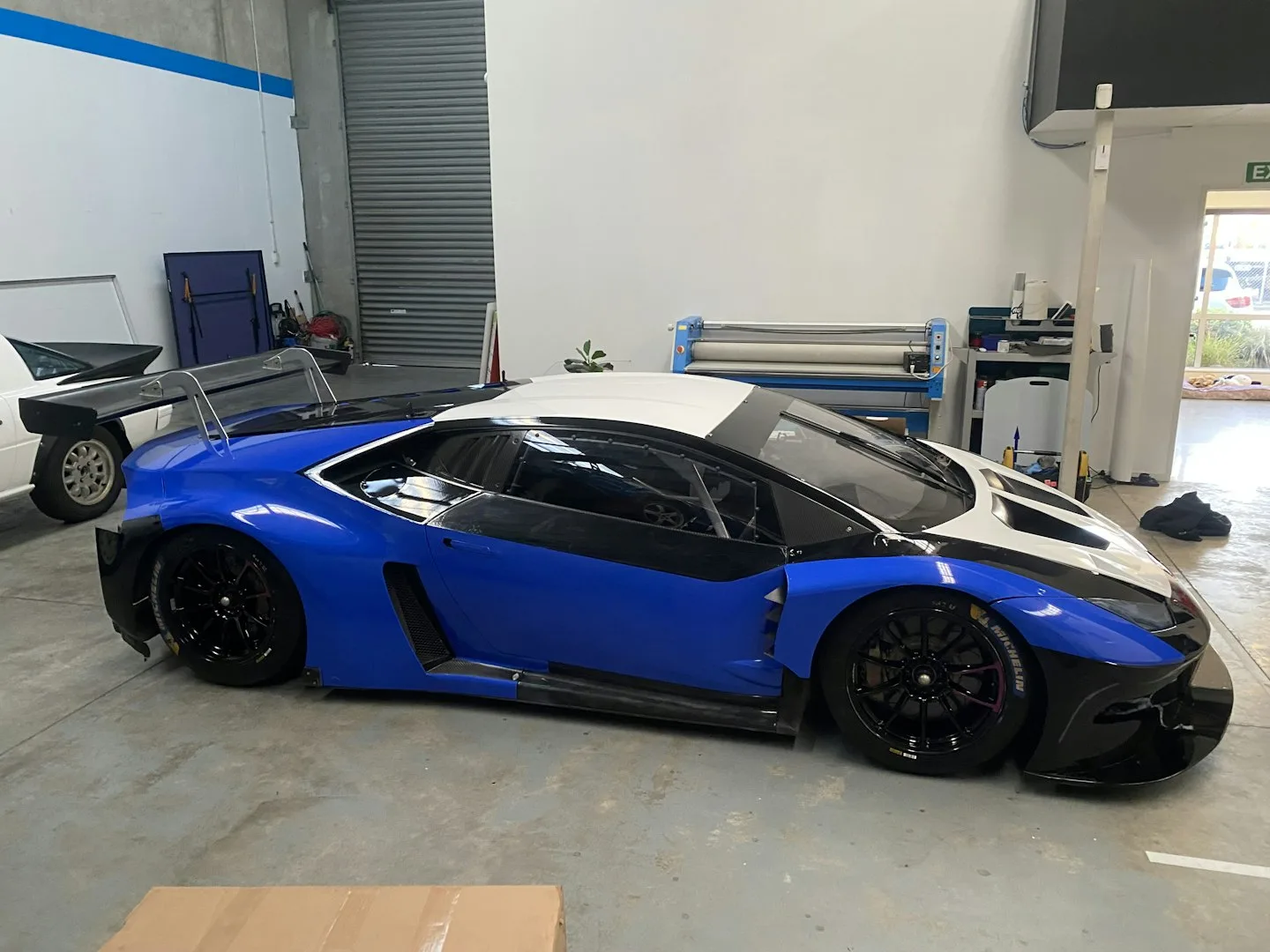
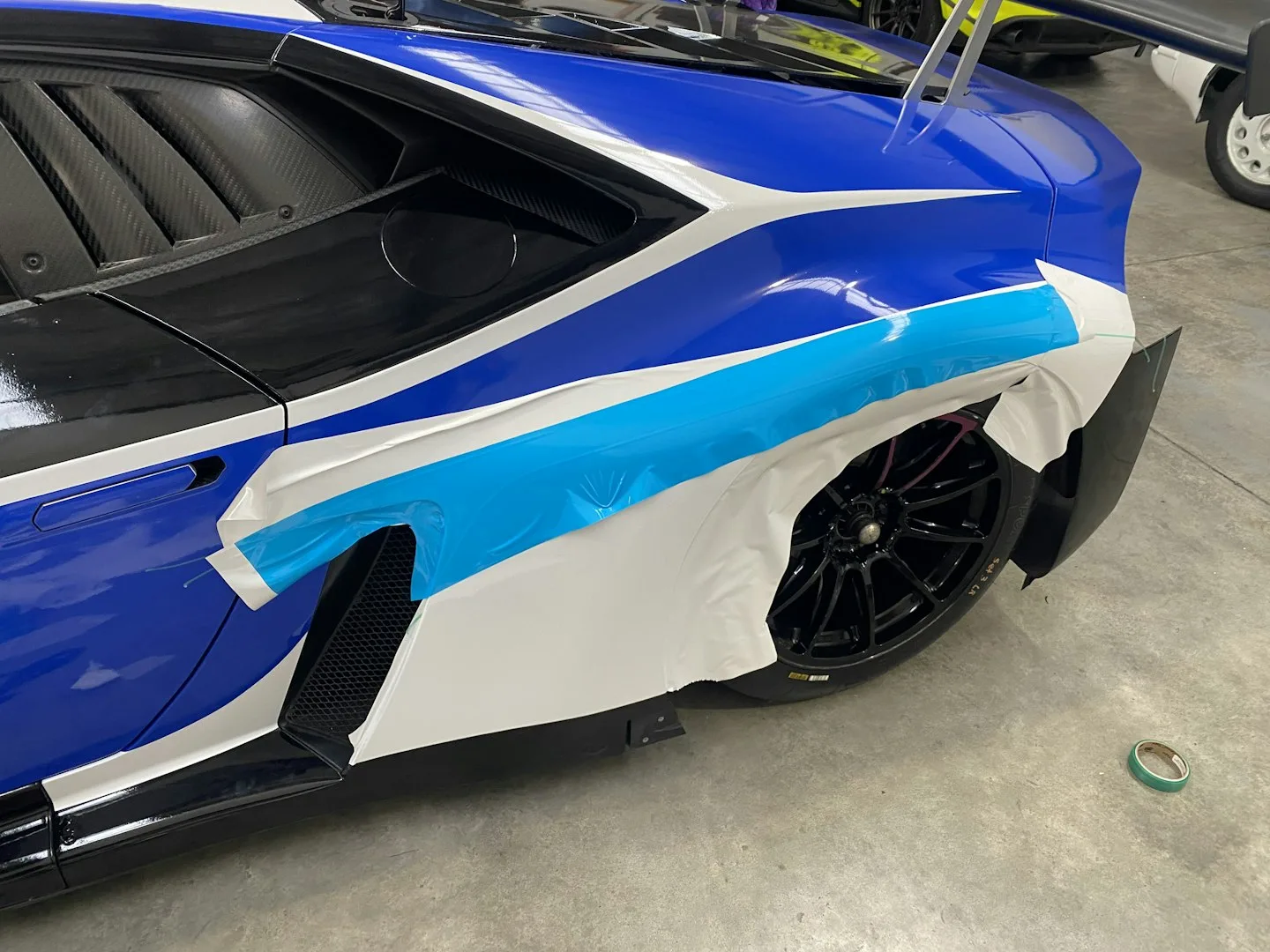
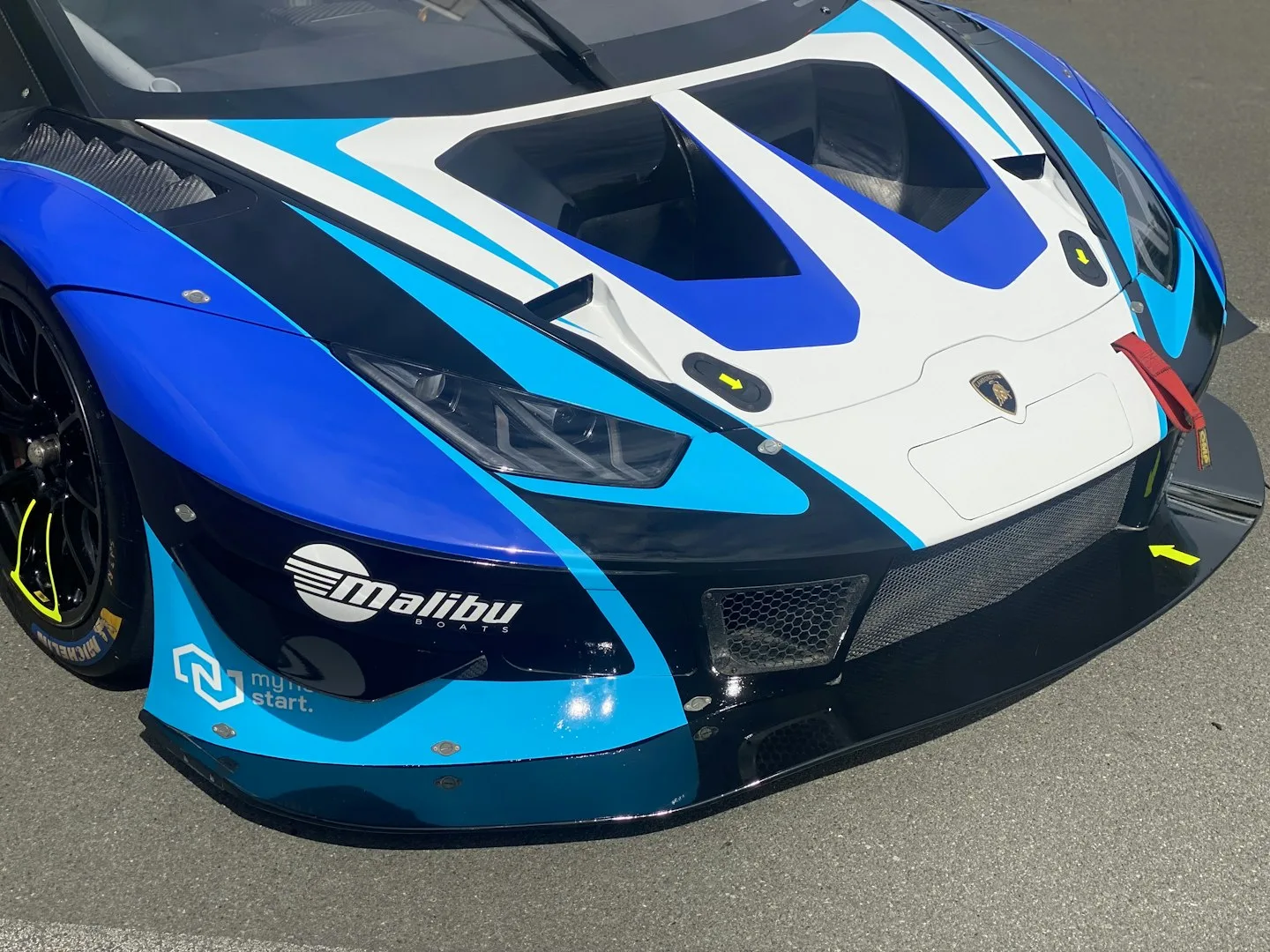
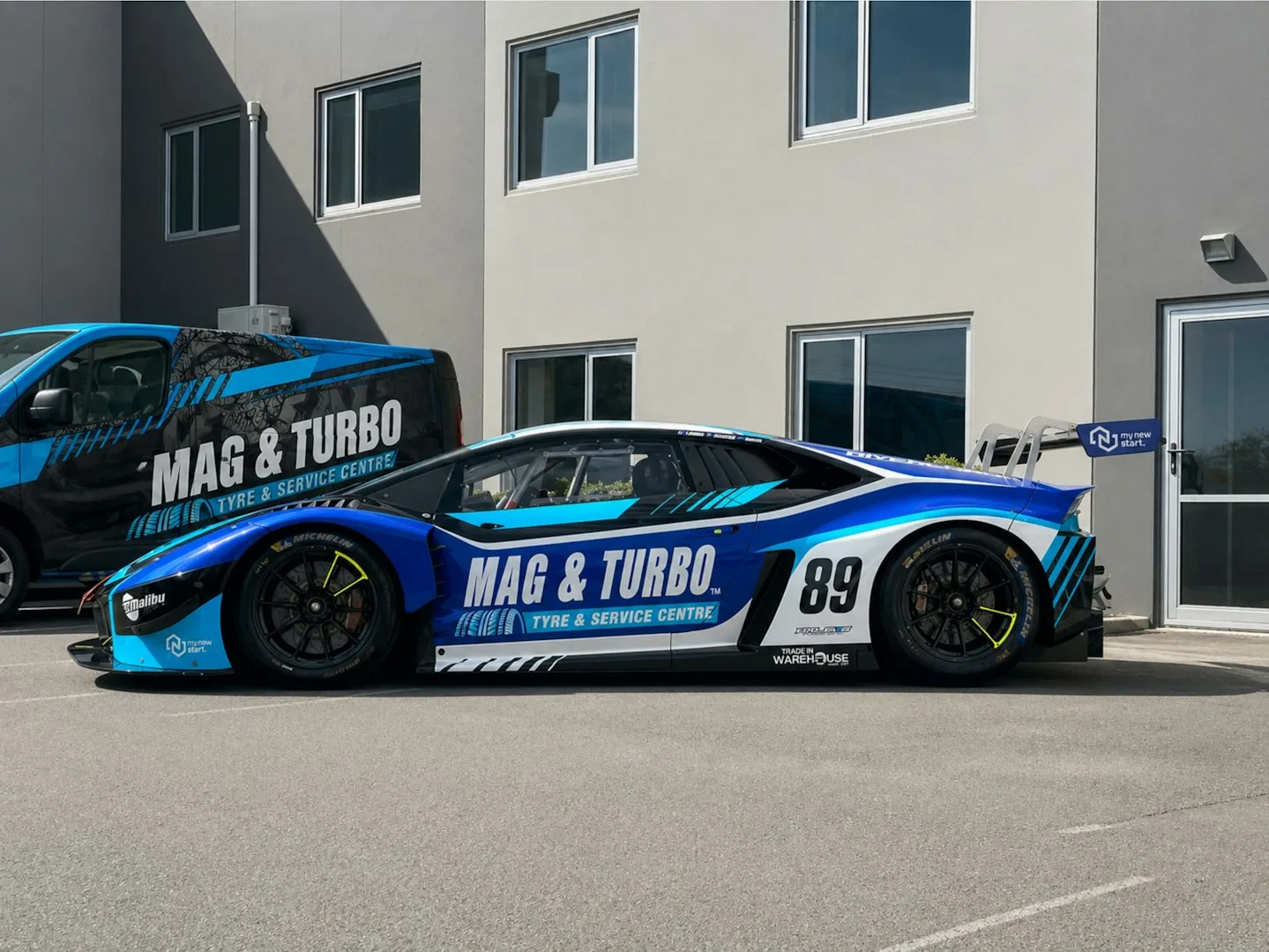
Stripes that land exactly where the bodywork says they should, edges that hold, and colour vibrant enough to sit over carbon fibre without going flat. The kind of job where the quality is in everything you can’t see — the layer sequence, the tape that stayed down, the 10mm caps nobody will ever notice.